Interaction
Limited eye contact, less response to name, prefers solo play.

Autism, or autism spectrum disorder (ASD) is a developmental condition that affects how a child communicates, learns, and connects with the world. According to the Centers for Disease Control, autism affects about 1 in 31 children in the United States today. On average, autism is diagnosed around age 5 in the U.S., though signs often appear by age 2 or 3.
Autism looks different for everyone, and each person with autism has a distinct set of strengths and challenges. Children with autism may communicate and socialize differently, have strong reactions to sensory experiences, or find comfort in repetitive behaviors and routines.
Every child with autism is wonderfully unique. Their strengths, personalities, and potential shine in different ways. Autism may change how your child experiences the world, but it doesn’t limit what they can achieve. We’ve worked with families who wondered if their child would ever talk, make a friend, or go to school—and we’ve seen those same children reach milestones that once felt out of reach. With the right support, your child’s journey can be filled with growth, connection, and joy.

Autism spectrum disorder (ASD) shows up differently for every child, but there are some common early signs that parents often notice. Many of these signs appear in the first two years of life and relate to how a child communicates, plays, and interacts with others. While not every child with these traits will have autism, spotting patterns early can help families seek evaluation and support sooner. Early intervention is proven to make a meaningful difference in a child’s development, so knowing what to watch for matters.
Some early signs of autism may be subtle at first, like not pointing to show interest or not making eye contact, and others may be more noticeable, like few or no verbal words. What’s important is looking at the overall picture of your child’s growth and social connections, not just one isolated behavior. If several of these traits are present, it’s worth bringing up with a pediatrician or developmental specialist.
Limited eye contact, less response to name, prefers solo play.
Fewer gestures, delayed speech or word use.
Repeats sounds or movements, flaps or rocks.
Likes routines, upset by change, fixates on objects.
If you’ve noticed some of these early signs, screening tools can be a helpful next step. While autism is identified through observation and assessment by a healthcare professional, tools like the M-CHAT-R and CAST can help you understand if the patterns you’re noticing are worth exploring further. Just remember—a positive result on one of these tools isn’t an autism diagnosis. It simply means it’s a good idea to talk with a specialist who can do a full evaluation.
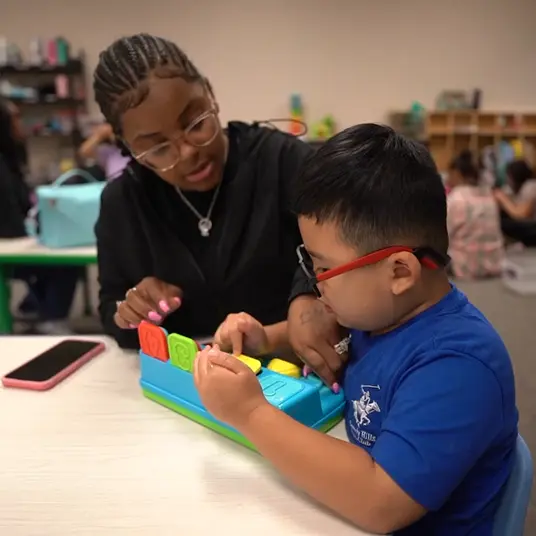
Applied Behavior Analysis (ABA) is a research-based therapy that helps children with autism build communication, social, and daily living skills. It’s been studied for decades and is considered the gold standard for autism intervention. ABA can help your child make everyday progress—like asking for what they need, playing with a sibling, or gaining independence in their daily routine.
At Golden Steps, we create individualized therapy plans designed to meet your child exactly where they are. We celebrate every milestone—whether it’s a first word, a new friendship, or mastering a task they’ve been working toward. Families often tell us that the skills their child learns in therapy ripple out into everyday life, making things easier and more connected at home, at school, and in the community.
We don’t believe in a “one size fits all” approach to therapy. Your child’s program is designed for their specific goals, personality, and pace. Parental training gives your family a chance to connect with your child’s BCBA and care team, ensuring therapy doesn’t only happen in the clinic but extends into your home and community.


ABA Therapy for Children: A Complete Guide for Families

Raising a child with autism comes with a lot of questions and challenges. At Golden Steps, we believe families do best when they have clear information and practical support. That’s why we offer resources, guides, and tools to help you understand autism, explore your options, and use helpful strategies at home.
Whether you’re just learning about your child’s diagnosis, looking for support in your area, or trying to figure out how to handle tough moments, our team is here to help. We know that when parents have the right information and tools, their kids make better progress. That’s what we’re here for.